I have written an new article for the LLAS blog (in a personal capacity).
Some rise by sin and others by virtue fall. William Shakespeare, Measure for Measure
Read the full article on the LLAS news blog
I have written an new article for the LLAS blog (in a personal capacity).
Some rise by sin and others by virtue fall. William Shakespeare, Measure for Measure
Read the full article on the LLAS news blog
The report from the LLAS Subject Centre National Student Survey project last academic year is now online. In the project we focused in on eight of the 22 questions. Whilst many of the questions were found to be problematic, this one was especially difficult to unpack.
Question 19: The course has helped me to present myself with confidence.
From the report
When answering this question, many students initially thought about giving oral presentations. It was also linked to employability and interviewing skills, but the question of whether this was about personal confidence or academic confidence was unclear. And where students reported an increase in confidence, was this down to the skills their course had given them, their year abroad, their work placements, or was it just part of being four years older?
One member of staff observed that the NSS is carried out at a time where students are at their most anxious, perhaps looking for work, perhaps worried about the future. In languages it was suggested that this question might be thought about in the context of L2 competence or confidence in dealing with people from other cultures. ―It’s a bit of a weird question said one student. ―It really wants you to say “yes”, because if you say “no”, you‘re saying something bad about yourself.
Further thoughts
Some further thoughts here. Some a little pedantic maybe, but that’s what happens when you start to unpack the question with students and lecturers.
| What this question might mean | Possible assumptions | Other issues |
| Employability
Doing oral presentations Feeling confident in person Interviewing skills Self-belief Able to express opinions without fear. Able to challenge the opinions of others. Not anxious Students can stand up for themselves Students are confident they will get a good job. |
Students were unable to present themselves with confidence at the beginning the course.
Confidence comes from going the course. Presenting oneself with confidence is a good thing (some students might benefit from being less confident) A course which does not help students present themselves with confidence is not a good course. The student who answers this question in negative might have been better off doing a different course or studying at a different place. |
Confidence might come from sources other than the course e.g. student societies, increased age, work experience, time spent abroad
Does a negative answer to this question suggest that the course was in any way inadequate? Some evidence of students thinking about L2 language confidence, but this question was for students of all disciplines. Students who answer this in the negative are saying something bad about themselves. Student anxiety or lack of confidence indicates poor teaching or course design. |
Suppose you have just completed French Level 4. What standard are you at? Can you ask for directions, read L'Étranger, conjugate the pluperfect subjective, book a hotel room, express your thoughts on the Arab Spring, recognise the past historic tense, or discuss Molière on French TV?
It depends of course. In my most recent report of ‘non-specialist’ language learners (in other words, those not doing a degree in languages – I’m not really sure about the term), I asked learners to provide me with the exact title of their course. I then mapped their answers to the standard they said they should have reached by the end of the course. What I found was that Level/Stage 4 courses appear at all three levels to which I mapped the course titles.We have a Level 6 at A1/A2, a Level 8 at B1/B2, a Level 4 at C1/C2 showing just how every institution has its own system. Thinking radically for a moment, why don’t we standardise our course titles?
Some of the advantages I can think of include:

We are now at the end of Day 2 of LLAS: the Centre for Languages, Linguistics and Area Studies. Our new website is up nicely integrated with Twitter and Facebook. Our new logo builds on our longstanding identity as LLAS (pronounced L-L-A-S) and we have kept our purple colours.
We have 19 events up on our website now kicking off with our annual workshop for Heads of Department on 14 September. Much of our professional development is going on as it has for the past eleven-and-a-half years as we seek to maintain and develop that which we have built up.
On a personal level there are significant changes. I am now only working only four days per week, but am seeking ways to make up my shortage of hours(!). Additionally, as from next week I will start as the Acting Academic Coordinator for the Higher Education Academy Islamic Studies Network, a role which I expect to be undertaking until March 2012.
I’m currently catching up on some unfinished business from last week (I was ill for a couple of days), notably a summary report on the National Student Survey projects we funded and the 2011 survey of non-specialist language learners.
I will be a taking some time off work later this month with plans to finish painting the hallway, landing and stairs (in Dulux cookie dough) and continuing to organise my messy outbuilding (bigger than a shed, smaller than a garage).
The new LLAS: Centre for Languages, Linguistics and Area Studies will come into existence on 1 August. Despite the withdrawal of most of our HEA funding we are fortunate to be able to carry on with some of our activities as a ‘not for profit’. We will continue to work with HEA as well as with subject associations in LLAS.
We have a programme of workshops and conferences lined up already and we are planning further workshops on areas such as employability, language teaching and sustainable development. We will also be available to provide staff development in departments and will continue to publish Début: the undergraduate journal of languages, linguistics and area studies.
Nevertheless, this is very much the end of an era. I will greatly miss the many colleagues in other subject centres I have worked with over the years though I hope that I will continue to see them in other settings.
I'm pleased to report that LLAS activity post-July 2011 is shaping up nicely. Our first event of the new academic year will be one for Heads of Departments which will take place in mid-September. We also have dates for our annual e-learning symposium and our annual new staff event. Dates for e-learning and research methods courses will be up on our website soon.
Thriving in the New World of Higher Education: a workshop for heads of department and leaders in languages, linguistics and area studies
Date: 14 September, 2011
Location: Room B202, Bloomsbury Suite, School of Oriental and African Studies, University of London
Event type: Workshop
2012
e-Learning symposium 2012
Date: 26 January, 2012 - 27 January, 2012
Location: Avenue Campus, University of Southampton
Event type: Conference
Life and work in academia: event for new and aspiring lecturers in languages, linguistics and area studies
Date: 12 April, 2012
Location: Conference Aston, Aston University, Aston Triangle, Birmingham, B4 7ET
Event type: Workshop
For further details please see the LLAS website. There are more details here about the work we will be doing from 1 August.
Liz Lightfoot’s recent article “The value of area studies” in British Academy Review succinctly outlines the difficulties and challenges facing departments of area studies. In the eight plus years I have held the area studies remit for the Subject Centre for Languages, Linguistics and Area Studies, discussions about area studies invariably focus on the identity of the field–for example in 2004 LLAS ran a workshop entitled the Disciplinary Identity of Area Studies. In 2005, I attended a workshop entitled The Future of Interdisciplinary Area Studies run by the University of Oxford. In many respects the British Academy event The role of Area Studies in Higher Education in November 2010 was a revisiting of the Oxford conference. I even had the opportunity to reacquaint myself with many of the same people.
When I joined LLAS in 2003 my primary role was to run the Area Studies Project. A key aim of that project was build up an area studies community. There have been some successes. Driven by the project and in particular the vision of Dick Ellis, the then chair of the Area Studies Specialist Advisory Group the UK Council for Area Studies Associations (UKCASA) was formed in November 2003. It is pleasing to see that UKCASA is providing a strong voice for area studies in both teaching and research. Moreover, it has helped to bridge the gap between Anglophone and non-Anglophone area studies. The funding for the Language-based area studies centres was also an encouraging sign.
However, the questions raised when area studies is mentioned seem to be the same as they were eight years ago. And they are probably much the same as they were twenty, thirty, forty, fifty years ago. Department closures, the apparent rewarding of disciplinarily specialisation by the RAE and REF, the reliance of area studies programmes on ‘donor’ departments and questions of whether interdisciplinarity (more breath) inevitably means less depth leading to the suggestion that interdisciplinary courses might be a bit light, intellectually speaking. Naturally the latter is denied more area studies proponents who see the demands of area studies as more rather than less challenging.
Lightfoot’s article opens with the newsroom cry “Find someone who knows about Egypt!” in response the protests taking place there and elsewhere in the Middle East. Quoted in the article Tim Wright says “The problem with providing a national resource is that no one knows where the next area of concern will come from? Will it be a need for Kurdish specialists, or people with a deep knowledge of Afghanistan, Egypt or Pakistan?”
Or Canada maybe? Well probably not, but from a government perspective a key rationale for area studies is based on the national interest, the next protest or the next war. Talk is afoot of another referendum in Quebec, but whether that referendum, whatever its outcome, will generate much interest in the UK is unclear. The rationales for area studies tend focus on the need to understand the different, the unknown, the economically important and the dangerous. Perhaps the real worry is that we will never seek to understand those societies which we see as similar, known, economically unimportant and safe.
Reference: Lightfoot, L. (2011) The Value of Area Studies, British Academy Review 17, pp. 48-51
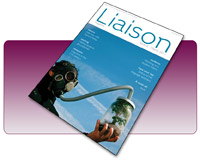
I have written a short article about using the National Student Survey (NSS) for the latest edition of the LLAS magazine Liaison.
I am also overseeing some projects on the NSS. I have developed an A0 dialogue sheet which can be downloaded from my humbox page.